How to Reduce Germ Spread in Shared Workspaces
Shared workspaces are designed to bring people together.
The challenge is that germs move around shared environments just as easily as people do.
Door handles, kitchen taps, shared desks, meeting rooms, kettles, printers, lift buttons… most workplaces have dozens of high-contact areas that are touched repeatedly throughout the day, often without people even noticing.
That’s usually how germs spread in office environments.
Not through one major incident, but through constant everyday contact across busy shared spaces.
Why Shared Workspaces Carry Higher Risk
Modern workplaces are more collaborative than ever.
Hybrid working, hot desking, communal kitchens, breakout areas, and shared meeting rooms all create more movement between people and spaces throughout the day.
That doesn’t make offices unsafe, but it does mean businesses need to think more carefully about workplace hygiene and infection control.
The busiest areas are usually the ones carrying the highest levels of repeated contact.
Kitchens, toilets, shared technology, reception areas, desks, and communal spaces can all experience constant use from multiple people in a short space of time.
Over time, bacteria and germs naturally build up across those surfaces if standards aren’t maintained consistently.
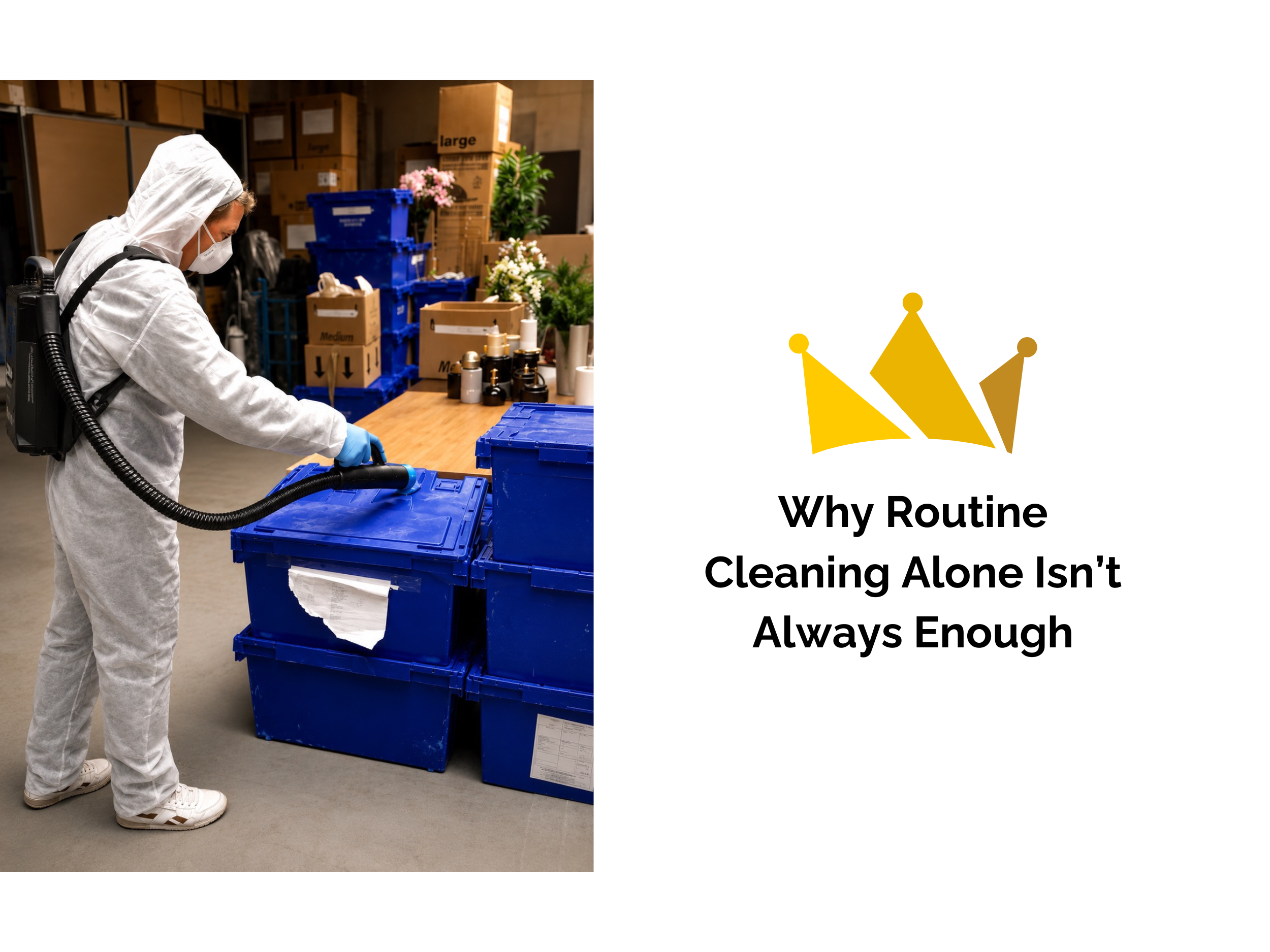
Why Routine Cleaning Alone Isn’t Always Enough
Routine cleaning plays an important role in keeping workplaces clean, organised, and presentable day to day.
But in high-contact environments, there are times when businesses need something more targeted.
A workspace can look visually clean while still carrying contamination across frequently touched areas.
That’s where professional COVID-19 decontamination and anti-viral cleaning measures become incredibly valuable.
Targeted sanitisation treatments focus specifically on reducing harmful bacteria and viruses across high-contact spaces, helping create a safer and healthier environment for employees, visitors, and customers.
The Importance of High-Contact Cleaning
Not every part of an office carries the same level of hygiene risk.
Some areas naturally experience much heavier use than others.
Shared kitchens are a good example. The same fridge handle or kettle switch might be touched dozens of times before lunchtime. Meeting rooms often cycle through multiple teams throughout the day. Shared desks, touchscreens, door handles, and breakout spaces all create repeated contact too.
Professional decontamination cleaning focuses attention on these high-contact areas using specialist products, equipment, and procedures designed to support infection control standards.
Creating Confidence in Shared Environments
Workplace hygiene affects more than cleanliness alone.
People notice when a workspace feels properly maintained.
Employees feel more comfortable using shared facilities when hygiene standards are clearly being prioritised. Visitors and customers feel more reassured in environments that are visibly cared for and professionally maintained.
That confidence matters, especially in busy shared workplaces where lots of people interact with the same spaces every day.
Supporting Healthier Workspaces
Reducing germ spread in shared workspaces isn’t about creating fear or turning offices into sterile environments.
It’s about sensible prevention, consistent hygiene standards, and creating workplaces that support the people using them every day.
At CleanKing, our professional COVID-19 decontamination and anti-viral cleaning services help businesses reduce contamination across high-contact areas and maintain healthier shared environments.
Nothing excessive. Just practical, professional support designed around how modern workplaces actually function.